The Ultimate Guide to 100L Atmospheric Water Generators: Your Reliable Off-Grid Water Solution
Feb 12, 2026
In a world where clean drinking water is becoming increasingly scarce—especially in remote regions, arid deserts, and areas without access to safe tap water—a reliable water source is no longer a luxury, but a lifeline. Enter the 100L Atmospheric Water Generator (AWG): a powerful, efficient device designed to extract moisture from the air and convert it into pure drinking water, producing up to 100 liters per day. Unlike traditional water supply methods that rely on pipelines, wells, or external water sources, 100L AWGs harness the "invisible water resource" in the atmosphere, making them a versatile and sustainable companion for communities, businesses, and off-grid locations worldwide.
At its core, a 100L AWG is defined by its daily water production capacity: up to 100 liters of pure drinking water under optimal conditions, with advanced models adapting to varying humidity levels to maintain stable output. Its working principle revolves around two key technologies, tailored to different climatic environments: condensation technology and adsorption material technology. For high-humidity areas (such as Southeast Asia, South American rainforests, and southern China, with relative humidity of 70%-90%), the AWG uses condensation technology similar to air conditioning—cooling air to below its dew point to condense water vapor into liquid droplets, then collecting and purifying them. For arid regions (such as African deserts, the Middle East, and northern China, with relative humidity as low as 30%-50%), it adopts high-performance adsorption materials to capture water molecules from dry air, then releases concentrated water vapor through heating for condensation. Equipped with multi-stage purification systems—including activated carbon filtration, UV sterilization, and mineralization—the produced water meets international drinking water standards (such as WHO standards), ensuring safety and freshness.
One of the greatest strengths of a 100L atmospheric water generator is its versatility in application scenarios, making it suitable for both commercial and residential use. For remote communities and off-grid areas—such as African desert villages, small island settlements, and high-altitude outposts—it serves as a stable water supply, meeting the daily drinking and basic living needs of 20-50 people. In commercial and public spaces, such as offices, schools, hospitals, and outdoor construction sites, it provides a convenient and cost-effective drinking water solution, eliminating the need for bottled water delivery and reducing plastic waste. In emergency situations—such as natural disasters (storms, floods, earthquakes) that disrupt traditional water supply, or water pollution incidents—the 100L AWG becomes a lifesaver, quickly providing clean water to affected populations. It is also ideal for agricultural scenarios, such as solar-powered container farms, where it can recycle water vapor and supply water for crop growth, forming a closed-loop water cycle system.
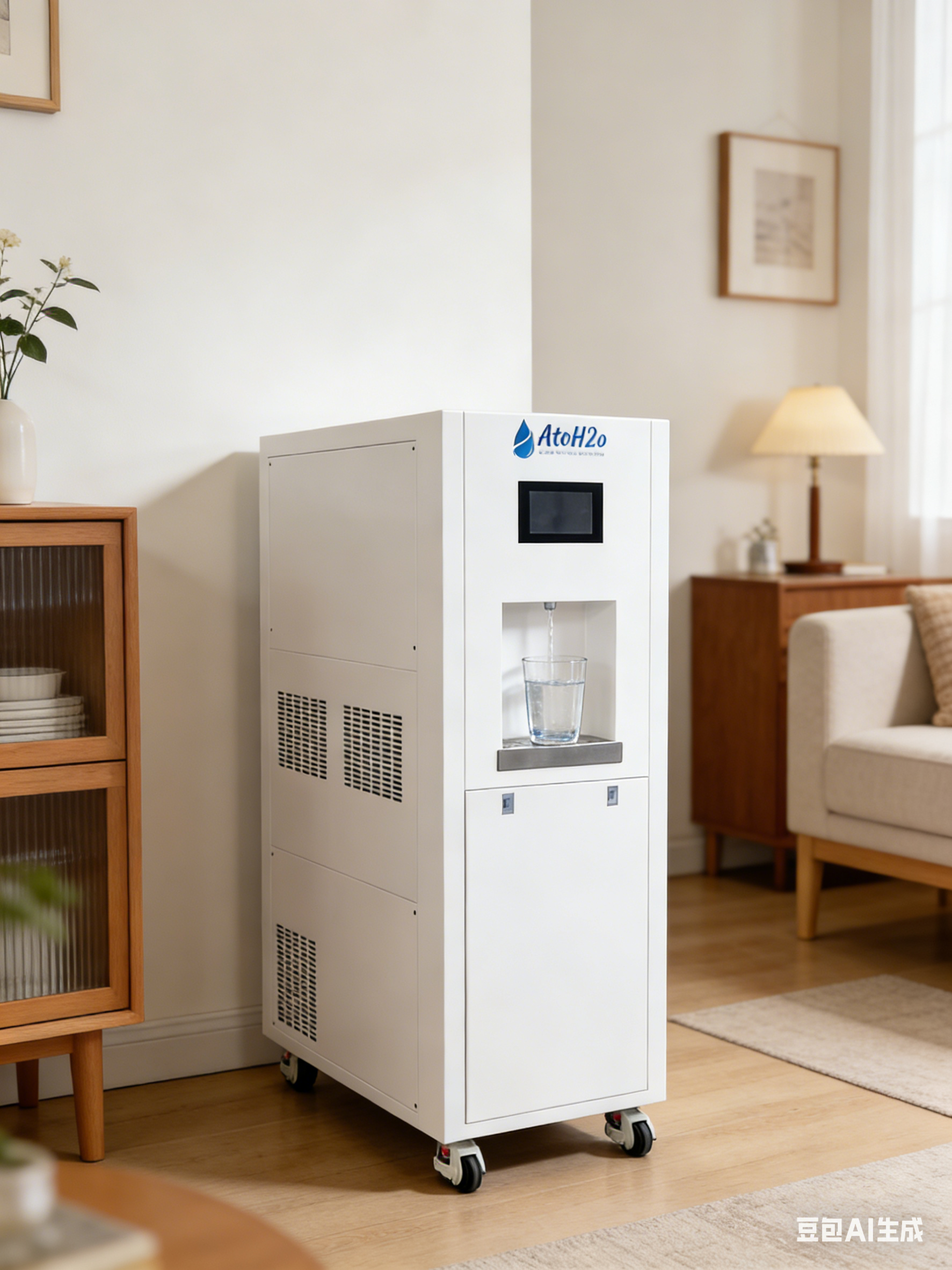
When it comes to operation and power supply, Portable Atmospheric Water Generator offer flexible and convenient options to adapt to different environments. Most models can be powered by a standard grid connection, with energy-efficient designs that reduce power consumption—advanced condensation-based AWGs can produce 3-3.8 liters of water per 1kWh of electricity, making them economical to run over the long term. For off-grid locations without access to electricity, solar-powered models are available: connecting to 100W-200W solar panels to harness solar energy, enabling continuous water production even in remote desert areas where grid power is unavailable. Some models also support dual power supply (grid + solar), ensuring stable operation even in areas with unstable power. Maintenance is simple: regular cleaning of air filters and purification components is sufficient to keep the device running efficiently, with no complex mechanical parts requiring frequent replacement.
Durability, safety, and water quality are key considerations for any water-generating device, and 100L AWGs are built to meet high standards. Most feature a rugged, weather-resistant design—with corrosion-resistant casings and sealed components—that can withstand harsh outdoor conditions, including high temperatures (up to 45℃) and low temperatures (down to -10℃), making them suitable for use in extreme environments like the Sahara Desert or northern China’s cold regions. The multi-stage purification system ensures that the produced water is free from impurities, bacteria, and harmful substances: UV sterilization effectively eliminates 99.9% of bacteria and viruses, while activated carbon filtration removes odors and residual contaminants, and mineralization adds essential trace elements for healthier drinking water. Safety features include overheat protection, water level control, and leakage protection, preventing equipment damage and ensuring safe operation. It is important to note that water production may vary slightly with changes in ambient temperature and humidity—lower humidity or extreme temperatures may reduce daily output, but advanced adsorption technology minimizes this impact.
For businesses and organizations focused on sustainability and environmental protection, the 100L AWG offers significant ecological benefits. By converting air into water, it reduces reliance on bottled water and groundwater extraction, alleviating pressure on limited water resources. It also eliminates plastic waste generated by bottled water, contributing to a greener and more sustainable environment. Additionally, its energy-efficient operation and compatibility with solar power further reduce carbon emissions, aligning with global environmental protection goals. Unlike traditional water supply methods that require complex infrastructure (pipelines, wells), the 100L AWG is a "zero-infrastructure" solution that can be quickly installed and put into use, saving time and construction costs.
In conclusion, the 100L Atmospheric Water Generator is a versatile, reliable, and sustainable solution to the global water scarcity challenge. It bridges the gap between traditional water supply methods and off-grid needs, offering stable clean water production without relying on external water sources. Whether for remote communities, commercial spaces, emergency situations, or agricultural use, the 100L AWG provides a cost-effective, eco-friendly, and convenient water supply. With adaptive technology for different climates, flexible power options, and strict safety and water quality standards, it is the ultimate off-grid water solution, bringing hope and reliable clean water to areas that need it most.






 Network Supported