Atmospheric Water Generator solution provider
Home

Air to water generator

Air to water generator

  • The Ultimate Guide to 100L Atmospheric Water Generators: Your Reliable Off-Grid Water Solution
    The Ultimate Guide to 100L Atmospheric Water Generators: Your Reliable Off-Grid Water Solution Feb 12, 2026
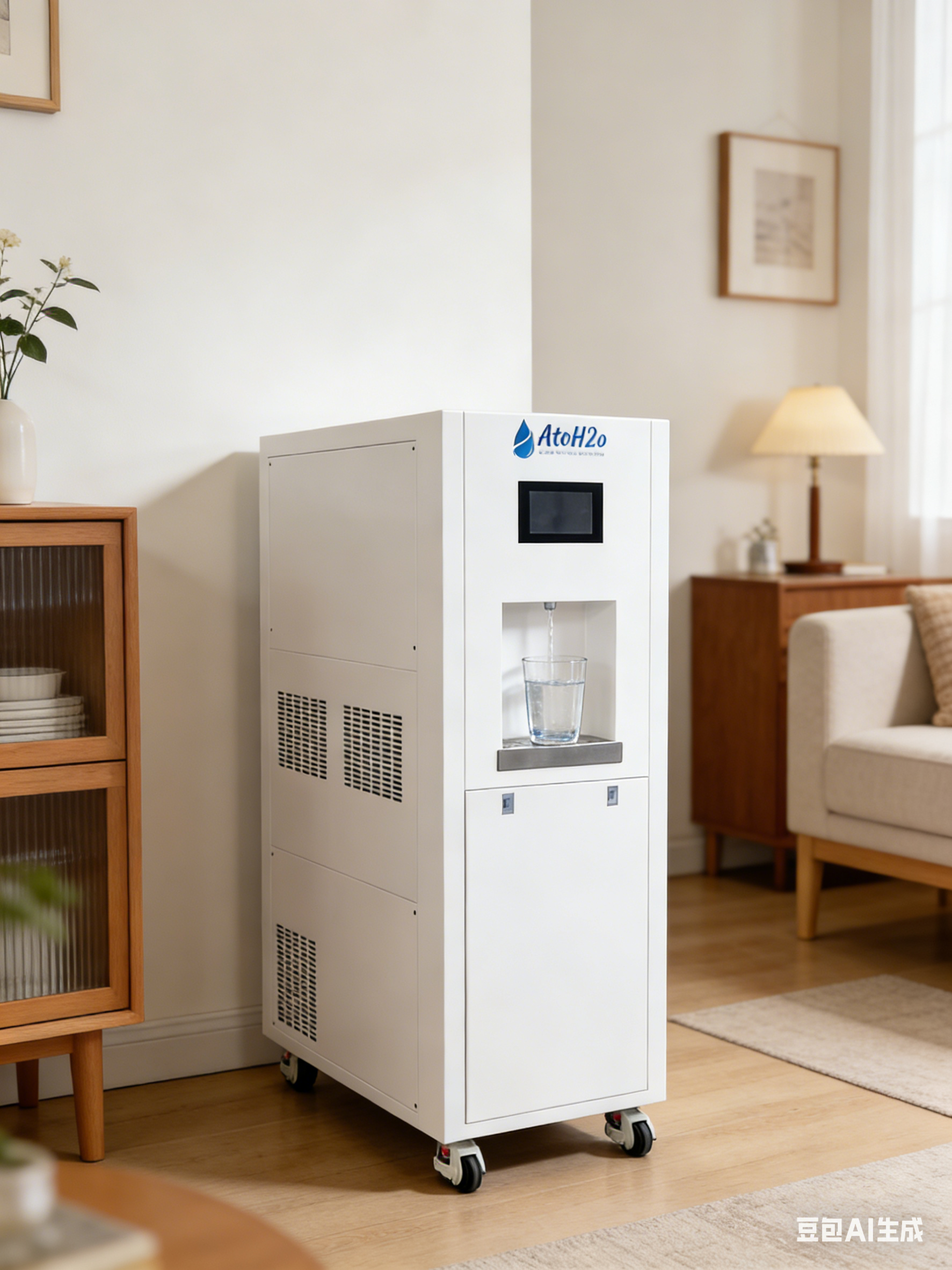
      In a world where clean drinking water is becoming increasingly scarce—especially in remote regions, arid deserts, and areas without access to safe tap water—a reliable water source is no longer a luxury, but a lifeline. Enter the 100L Atmospheric Water Generator (AWG): a powerful, efficient device designed to extract moisture from the air and convert it into pure drinking water, producing up to 100 liters per day. Unlike traditional water supply methods that rely on pipelines, wells, or external water sources, 100L AWGs harness the "invisible water resource" in the atmosphere, making them a versatile and sustainable companion for communities, businesses, and off-grid locations worldwide.     At its core, a 100L AWG is defined by its daily water production capacity: up to 100 liters of pure drinking water under optimal conditions, with advanced models adapting to varying humidity levels to maintain stable output. Its working principle revolves around two key technologies, tailored to different climatic environments: condensation technology and adsorption material technology. For high-humidity areas (such as Southeast Asia, South American rainforests, and southern China, with relative humidity of 70%-90%), the AWG uses condensation technology similar to air conditioning—cooling air to below its dew point to condense water vapor into liquid droplets, then collecting and purifying them. For arid regions (such as African deserts, the Middle East, and northern China, with relative humidity as low as 30%-50%), it adopts high-performance adsorption materials to capture water molecules from dry air, then releases concentrated water vapor through heating for condensation. Equipped with multi-stage purification systems—including activated carbon filtration, UV sterilization, and mineralization—the produced water meets international drinking water standards (such as WHO standards), ensuring safety and freshness.   One of the greatest strengths of a 100L atmospheric water generator is its versatility in application scenarios, making it suitable for both commercial and residential use. For remote communities and off-grid areas—such as African desert villages, small island settlements, and high-altitude outposts—it serves as a stable water supply, meeting the daily drinking and basic living needs of 20-50 people. In commercial and public spaces, such as offices, schools, hospitals, and outdoor construction sites, it provides a convenient and cost-effective drinking water solution, eliminating the need for bottled water delivery and reducing plastic waste. In emergency situations—such as natural disasters (storms, floods, earthquakes) that disrupt traditional water supply, or water pollution incidents—the 100L AWG becomes a lifesaver, quickly providing clean water to affected populations. It is also ideal for agricultural scenarios, such as solar-powered container farms, where it can recycle water vapor and supply water for crop growth, forming a closed-loop water cycle system.   When it comes to operation and power supply, Portable Atmospheric Water Generator offer flexible and convenient options to adapt to different environments. Most models can be powered by a standard grid connection, with energy-efficient designs that reduce power consumption—advanced condensation-based AWGs can produce 3-3.8 liters of water per 1kWh of electricity, making them economical to run over the long term. For off-grid locations without access to electricity, solar-powered models are available: connecting to 100W-200W solar panels to harness solar energy, enabling continuous water production even in remote desert areas where grid power is unavailable. Some models also support dual power supply (grid + solar), ensuring stable operation even in areas with unstable power. Maintenance is simple: regular cleaning of air filters and purification components is sufficient to keep the device running efficiently, with no complex mechanical parts requiring frequent replacement.   Durability, safety, and water quality are key considerations for any water-generating device, and 100L AWGs are built to meet high standards. Most feature a rugged, weather-resistant design—with corrosion-resistant casings and sealed components—that can withstand harsh outdoor conditions, including high temperatures (up to 45℃) and low temperatures (down to -10℃), making them suitable for use in extreme environments like the Sahara Desert or northern China’s cold regions. The multi-stage purification system ensures that the produced water is free from impurities, bacteria, and harmful substances: UV sterilization effectively eliminates 99.9% of bacteria and viruses, while activated carbon filtration removes odors and residual contaminants, and mineralization adds essential trace elements for healthier drinking water. Safety features include overheat protection, water level control, and leakage protection, preventing equipment damage and ensuring safe operation. It is important to note that water production may vary slightly with changes in ambient temperature and humidity—lower humidity or extreme temperatures may reduce daily output, but advanced adsorption technology minimizes this impact.   For businesses and organizations focused on sustainability and environmental protection, the 100L AWG offers significant ecological benefits. By converting air into water, it reduces reliance on bottled water and groundwater extraction, alleviating pressure on limited water resources. It also eliminates plastic waste generated by bottled water, contributing to a greener and more sustainable environment. Additionally, its energy-efficient operation and compatibility with solar power further reduce carbon emissions, aligning with global environmental protection goals. Unlike traditional water supply methods that require complex infrastructure (pipelines, wells), the 100L AWG is a "zero-infrastructure" solution that can be quickly installed and put into use, saving time and construction costs.   In conclusion, the 100L Atmospheric Water Generator is a versatile, reliable, and sustainable solution to the global water scarcity challenge. It bridges the gap between traditional water supply methods and off-grid needs, offering stable clean water production without relying on external water sources. Whether for remote communities, commercial spaces, emergency situations, or agricultural use, the 100L AWG provides a cost-effective, eco-friendly, and convenient water supply. With adaptive technology for different climates, flexible power options, and strict safety and water quality standards, it is the ultimate off-grid water solution, bringing hope and reliable clean water to areas that need it most.
  • How do air-to-water generators ensure the purity and health of every drop of water?
    How do air-to-water generators ensure the purity and health of every drop of water? Nov 21, 2025
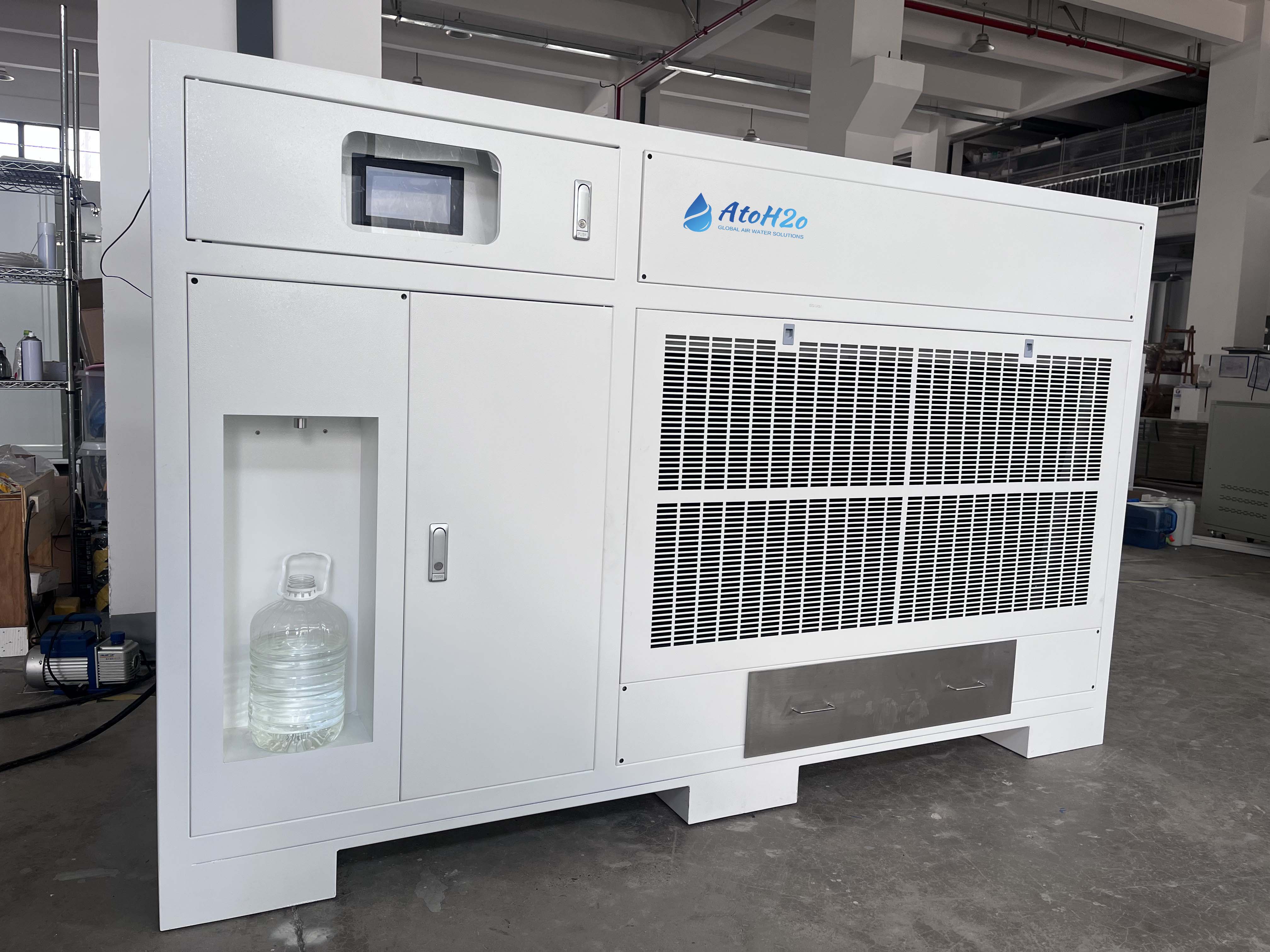
    You can trust air-to-water generators to give you pure water every day. These machines use advanced purification steps so you always get water that is safe to drink. When you use atmospheric water generators, you avoid harmful chemicals and germs found in other sources. Water from air feels clean and fresh, helping you stay healthy. Clean water means better health for you and your family.   Key Takeaways Air-to-water generators provide pure drinking water by using advanced filtration methods that remove harmful contaminants. These machines work best in humid environments, making them a reliable water source in areas with high moisture levels. Regular maintenance, including filter changes and cleaning, ensures the water remains safe and fresh for consumption. The combination of UV sterilization and reverse osmosis guarantees water free from bacteria, viruses, and heavy metals. Choosing air-to-water generators supports environmental sustainability by utilizing atmospheric moisture and reducing reliance on traditional water sources.   Atoh2o Air-To-Water Generators: How They Work Capturing Water From Air You might wonder how air-to-water generators make water from air. These machines use smart technology that extracts moisture from ambient air. The process starts by pulling air into the system. Inside, the generator cools the air, condensing the humidity into water droplets. This step mimics how rain forms in nature. Some atmospheric water generators use salts or desiccants to help collect even more moisture, especially when the air is dry. Tip: Air-to-water generators work best in places with high humidity. In regions with lots of moisture in the air, these machines can serve as your main water source. In drier areas, you may only use them as a backup or during seasons when humidity rises. The efficiency of atmospheric water generators depends on the temperature and humidity around you. When the air is dry, the amount of water produced drops. If you live in a low humidity region, you might notice that these machines do not make as much water from air. This means air-to-water generators need ideal conditions to work at their best.   Initial Filtration Steps After collecting water from the air, the system uses a high-efficiency air filter to remove dust and particles. This first filtration step keeps the water clean from the start. The air-to-water generators then move the water through multi-stage filtration. You get extra protection against contaminants. Each filtration stage targets different impurities, so you can trust the water from air to be safe. You benefit from advanced filtration that removes bacteria, viruses, and other harmful substances. The process ensures that every drop meets high standards for purity. With these steps, atmospheric water generators give you fresh, healthy water, even in places with limited water resources.   Purification Process For Safe To Drink Water Multi-Stage Filtration You get clean drinking water from air-to-water generators because they use multi-stage filtration. This process removes dust, chemicals, and other impurities. Each stage targets a different type of contamination. You can see how the system works in the steps below: The anti-static air filter traps dust particles from the air. The pre-carbon water filter removes organic compounds and free chlorine. The post-carbon water filter protects the reverse osmosis membrane and removes more contaminants. The TCR filter adsorbs organic contaminants. The lower tank carbon filter keeps large impurities away from the water booster pump. Reverse osmosis eliminates micro impurities and harmful substances. Multi-stage filtration helps you get potable water that is free of heavy metals and safe for your family. You benefit from this advanced purification because it removes bacteria, viruses, and heavy metals. The system makes sure your water from air is clean drinking water every time.   UV Sterilization & Reverse Osmosis You need water that is free of bacteria and viruses. Atmospheric water generators use uv sterilization to make sure your water is safe. The system exposes water to UV light, which damages the DNA or RNA of microorganisms. This process, called uv purification, stops bacteria and viruses from multiplying. UVC light, especially around 254 nanometers, works best for sterilization. Studies show that uv sterilization can reduce viral loads by up to 99% in seconds. UV purification works in flow-through reactors, so all water gets enough exposure. UVGI targets bacteria like Escherichia coli and Staphylococcus aureus. It also inactivates viruses such as influenza and coronaviruses. Reverse osmosis is another important step in purification. You get potable water that is free of heavy metals like lead and asbestos. Reverse osmosis systems can remove up to 99% of contaminants. This level of filtration is much higher than traditional methods. You can trust that your clean drinking water is safe and pure. UV sterilization and reverse osmosis work together to protect you from contamination.   Mineralization & Taste After multi-stage filtration and uv purification, the water may taste flat. You want water that tastes fresh and natural. The mineralization step adds essential minerals back into the water. This process improves the taste and makes the water healthier for you. You get clean drinking water that is not only pure but also pleasant to drink. A table below shows how each step in the purification process helps you: Purification Step What It Removes Benefit to You Multi-stage filtration Dust, organic compounds, chlorine, large impurities Clean drinking water UV sterilization Bacteria, viruses, protozoa Water free of bacteria Reverse osmosis Heavy metals, micro impurities Water free of heavy metals Mineralization Adds minerals Better taste, health You can rely on air-to-water generators for clean drinking water that is free of contamination and safe for your family.   Storage & Dispensing In AtoH2o 250L Commercial Industrial Atmospheric Water Generator Image Source: pexels   Maintaining Water Quality You want your water from air to stay pure after filtration. Air to water generator use special storage tanks to keep water quality high. These tanks use conservation methods that prevent recontamination. Ozone treatment helps oxidize and remove toxins or contaminants that might remain after filtration. This process stops bacteria from growing inside the tank, so your water stays safe. The system also uses UV sterilization and charcoal filters to keep water fresh. You can trust these features to protect your health. Regular inspections help you spot any changes in color or particles. Home water testing kits let you check for contamination quickly. If you ever doubt the safety of your water, boiling it adds another layer of protection. Here is a table showing how each stage helps maintain water quality and safety: Stage Description Air Intake and Assessment The system draws air and checks moisture for best extraction. Condensation Humid air cools, forming water droplets. Filtration and Purification Water passes through filters to remove contaminants and ensure safety. Storage and Distribution Purified water stays in tanks with systems to prevent stagnation and keep it fresh.   Hygienic Dispensing You get clean water every time you use air-to-water generators because they focus on hygienic dispensing. The system uses sealed taps and food-grade tubing to prevent outside germs from entering. You can fill your glass or bottle without touching the inside of the dispenser, which keeps your water safe. To keep your atmospheric water generator working well, follow these steps: Clean air filters and water tanks often. Replace filters every 6 to 12 months, depending on use. Check for leaks or damage. Monitor taste, odor, and clarity. Follow the manufacturer's instructions for maintenance. These steps help you enjoy a consistent source of water that is safe and environmentally friendly. You get peace of mind knowing your water stays fresh and pure over time. Tip: Regular cleaning and filter changes keep your water safe and tasting great.   Comparing Water From Air To Other Sources Purity & Safety Standards You want the purest water for your family. Air-to-water generators give you water from air that often surpasses the quality of tap and bottled water. These machines use advanced filtration, including activated carbon and UV-C treatment, to remove contaminants and pathogens. You can trust the water because it meets or exceeds World Health Organization drinking water standards. Municipal tap water sometimes contains impurities, and bottled water can vary in quality. Some bottled water is just reprocessed tap water and may have unsafe levels of impurities. Air-to-water generators use multiple filtration layers for extra safety. You get consistent water quality that you can monitor in real time. The system keeps water free from bacteria, viruses, and heavy metals. You also benefit from strict safety standards. These systems check water purity, air quality, and microbial growth. They follow electrical safety rules to prevent hazards. You can feel confident that your water stays safe every day.   Health Benefits & Reliability You need reliable access to clean water. Air-to-water generators provide a steady supply, even in places with limited water sources. You get water from air, so you do not depend on rivers, lakes, or underground wells. These machines work well in emergencies and can help during water shortages. They use the moisture in the atmosphere, making them a sustainable choice. Here is a table comparing features of air-to-water generators with traditional water sources: Feature Description Value You save money over time with cost-effective water production. Capacity You get a consistent amount of water every day. Filtering Multi-stage filtration keeps your water safe to drink. Energy Needs You can use renewable energy to run the system, making it reliable in many settings. Quality You enjoy fresh, great-tasting water that meets safety standards. You also help the environment. Air-to-water generators use humidity to make water, which reduces waste and the ecological footprint. These systems can run on solar power, making them even more sustainable. You support water security in your community, especially in areas with scarce or polluted water. Tip: Choosing air-to-water generators gives you peace of mind and helps protect the planet.   You get pure and safe water every time you use air-to-water generators. You protect your health by following safety practices, such as changing filters and testing for bacteria. Many users trust these systems because they meet strict certifications. New models use smart monitoring and solar power, which make water production cleaner and more reliable. You help the planet and your family when you choose water from air as your daily source.   FAQ How often should you change the filters in an air-to-water generator? You should change the filters every 6 to 12 months. Check the manufacturer's guide for your model. Tip: Regular filter changes keep your water clean and safe.   Does water from air taste different than tap water? You may notice a fresher taste. Mineralization adds essential minerals, improving flavor. Many users prefer the taste of water from air over tap water.   Can you use air-to-water generators in dry climates? You can use them, but water output drops in low humidity. Humidity Level Water Production High More water Low Less water   What kind of maintenance do you need to perform? You need to clean the tanks, replace filters, and check for leaks.
  • Atmospheric Water Generator: Green Technology that Draws Life from the Air
    Atmospheric Water Generator: Green Technology that Draws Life from the Air Jul 11, 2025
    With the increasing global climate change, water shortage has become a severe challenge worldwide. According to UN data, about a quarter of the world's population currently lives in areas with water shortages, and by 2050, this figure is expected to rise to more than half. In this context, traditional water source development methods can no longer meet the growing demand for water, and innovative water extraction technology is becoming an important direction for solving water resource problems.   As a cutting-edge technology that converts water vapor in the air into drinkable water, the Atmospheric Water Generator (AWG) has made significant progress in terms of technical maturity and application scope in recent years. It is not only a scientific and technological innovation, but also represents a new concept of water resources: water is not only present in rivers, lakes and seas, but also widely present in the air we breathe every day.   1. Working principle of 250L Commercial Industrial Atmospheric Water Generator The principle of Atmospheric Water Generator is based on the physical condensation process. Its core idea is to cool the water vapor in the air to below the dew point through refrigeration technology to condense it into liquid water. This process is similar to the water droplets condensing on the wall of a cold drink can in the summer. The whole process can be divided into the following steps:   1. Air intake and purification The machine draws in the surrounding air through a built-in fan and purifies it through a multi-stage filtration system to remove dust, pollen, particulate matter and harmful gases in the air, ensuring that the air entering the water system is clean and pollution-free.   2. Condensation of moisture The purified air enters the refrigeration module and is cooled by the compressor to cool the air below its dew point temperature, causing the moisture in the air to condense on the condensation plate in the form of water droplets.   3. Collection and filtration The condensed water droplets are collected and introduced into the water storage system, and then undergo multi-layer filtration, mineralization and ultraviolet sterilization treatment to finally reach the standard for direct drinking. Some high-end equipment will also use advanced technologies such as nanofiltration membranes and reverse osmosis to further improve water quality.   4. Storage and supply The purified water is stored in a food-grade water tank, and users can get drinking water through the water outlet at any time. Some models are also equipped with hot and cold water functions for convenient and diversified use.   2. Technical advantages of air-to-water generators The technical advantages of air-to-water generators make them uniquely competitive in a variety of scenarios:   1. Independence from traditional water sources Air-to-water generators do not rely on surface water, groundwater or municipal pipe networks, and are particularly suitable for deployment in water-scarce, remote or disaster-stricken environments, providing users with independent and sustainable drinking water solutions.   2. Environmental protection and energy saving Although atmospheric water generators consume electricity, they have a smaller carbon footprint than high-energy water supply methods such as seawater desalination and underground pumping. When used with clean energy such as solar energy and wind energy, green and low-carbon operation can be achieved.   3. High water quality guarantee Through multiple purification technologies, the water produced can achieve higher safety standards than tap water, avoiding secondary pollution caused by old pipe networks, and is particularly suitable for medical, scientific research and food processing industries that have extremely high requirements for water quality.   4. Flexible deployment and wide application Air-to-water generators can be used in homes, office buildings, schools, factories, border outposts, field operation bases and even military camps, with high flexibility and convenient use.   3. Applicable scenarios of air water generation technology 1. Arid areas and remote villages In areas with drought or uneven distribution of water resources such as the Middle East, Africa, and the Australian inland, air to water generator can provide valuable clean water sources and improve residents' drinking water conditions when air humidity conditions permit.   2. Urban high-rises and public buildings For high-rise buildings, office buildings, hospitals and schools with insufficient water pressure or poor water quality, air water generators can effectively ensure healthy drinking water as a supplementary water source, especially during the peak water use period in summer.   3. Emergency rescue and field operations In special circumstances such as natural disasters, wars, field scientific research, and engineering construction, traditional water supply systems may be destroyed. Air water generation equipment can be quickly deployed in a short time to ensure emergency water supply.   4. High-end families and smart homes For users who pursue a healthy quality of life, high-end air water generators can not only provide stable and safe drinking water, but also integrate smart home functions such as smart sensing, remote control, and voice interaction to enhance life experience.   4. Technical Challenges Although the prospects of air-to-water technology are broad, there are still some practical challenges:   1. Energy consumption In the process of air-to-water, refrigeration is needed to condense water. In an environment with low air humidity and high temperature, in order to obtain the same water output, the machine needs to work continuously, and energy consumption increases significantly.   2. Strong humidity dependence Air humidity is a key factor affecting water production efficiency. Generally speaking, the relative humidity needs to be above 30% for the efficiency to be of practical value. The air in arid, desert, plateau and other areas is often too dry, resulting in low water production efficiency.   3. Equipment cost and maintenance High-end air-to-water machines are relatively expensive, especially high-power or industrial-grade equipment. At the same time, regular replacement of filters, cleaning systems and energy consumption costs also increase the threshold for use.   4. Popularization and cognition Due to the limited public understanding of air-to-water technology, market acceptance has not yet been fully opened. Many people are still skeptical about the concept of "air can be turned into water", which needs to be promoted through popular science and practical applications.   V. Future Development Trends The development of air-to-water technology will continue to evolve in the following directions in the future:   1. Improve energy efficiency ratio Through new condensing materials, intelligent temperature control systems, and efficient compressor refrigeration technology, reduce unit water production power consumption and improve energy efficiency.   2. Combine green energy Integrate air-to-water machines with solar panels and wind power generation systems to create a "zero-emission" water source system, which is particularly suitable for areas with scarce resources.   3. Modularization and scale Expand from small household equipment to medium and large community water stations and industrial water supply platforms, support on-demand deployment, module expansion, and achieve large-scale water supply.   4. Intelligence and Internet of Things access Combining sensors, big data and AI algorithms, water quality monitoring, humidity prediction, equipment fault diagnosis and remote management are achieved, improving ease of use and maintenance efficiency.   The advent of air-to-water machines is not only a technological innovation, but also a challenge to the traditional concept of water resource utilization. It tells us that in the pursuit of a sustainable future, technology is no longer just the development of natural resources, but also the ability to reconstruct and rediscover resources.   "Water" is the source of life, and "air-to-water" may become an important supporting technology to ensure human drinking water safety in the future. With technological progress, cost reduction and increased global environmental awareness, air-to-water machines are expected to become highly popular green equipment, bringing clean and stable water sources to more families, communities and even countries around the world.

leave a message

leave a message
If you are interested in our products and want to know more details,please leave a message here,we will reply you as soon as we can.
submit

Home

Products

WhatsApp

contact